
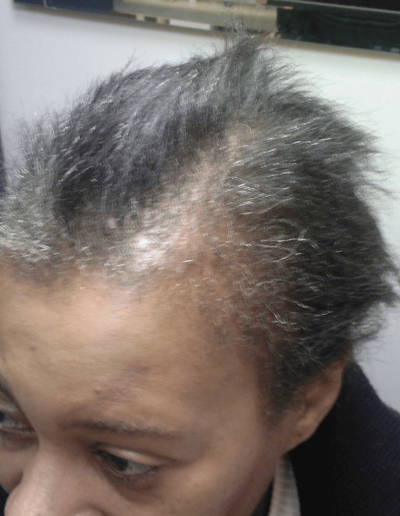
 Before
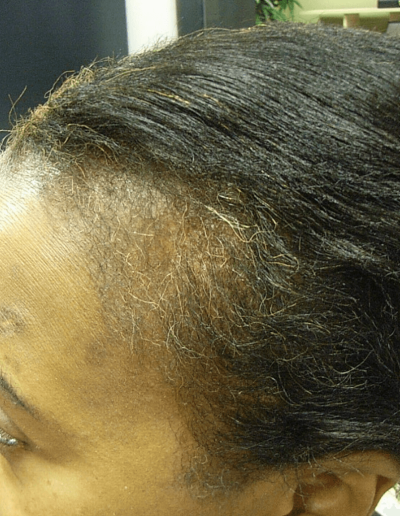 After
AfterTraction Alopecia9 months treatment
Hazel's Traction Alopecia Recovery
Severe hairline recession from years of tight braiding reversed with specialist care.
Learn how we helped →Struggling with hair loss? Learn what causes Traction Alopecia, how to spot the symptoms early, and explore proven treatments that help regain hair.

Traction Alopecia is hair loss caused by constant tension on the hair, such as that created by an overly tight ponytail, plaiting, or using too tight rollers to style the hair.
Traction Alopecia results from consistent tension on the hair, often due to tight hairstyles like braids or ponytails. This tension damages hair follicles, leading to hair thinning and loss, particularly around the hairline and temples. Early detection and adjustments to hair care practices can help mitigate the condition. Consulting a trichologist for tailored advice is crucial.
We helped Hazel overcome her severe Traction Alopecia within 14 months, leaving her with a full head of hair once again. See Hazel's progress.
If you place constant tension on your hair and are experiencing any of the following symptoms, you may be suffering from the condition:
BeforeAfterSevere hairline recession from years of tight braiding reversed with specialist care.
Learn how we helped →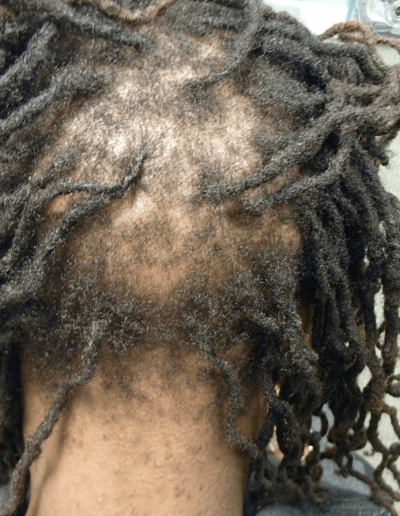 Before
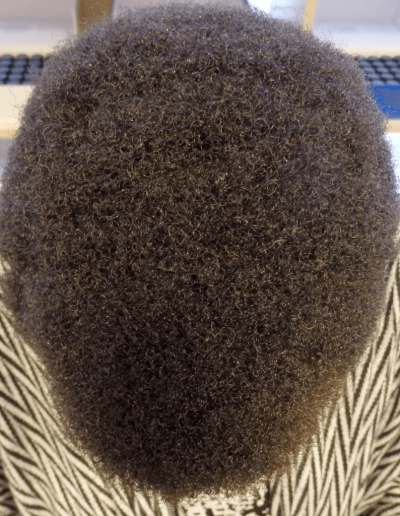 After
AfterAfro-textured hairline restored after severe traction alopecia from tight styles.
Learn how we helped →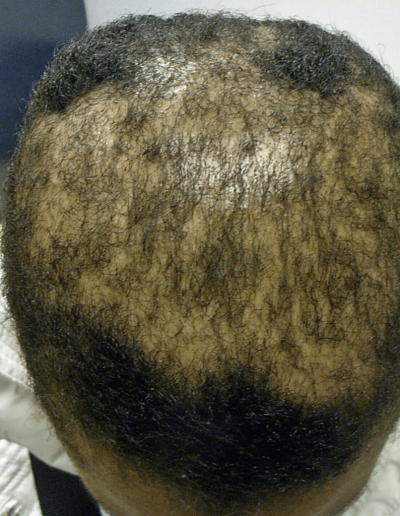 Before
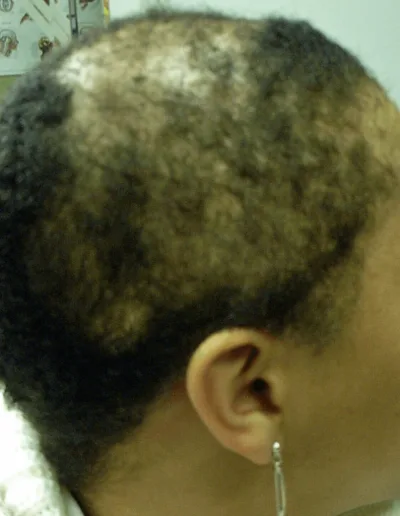 After
AfterChemical damage and traction loss from weaves corrected with intensive scalp treatment.
Learn how we helped →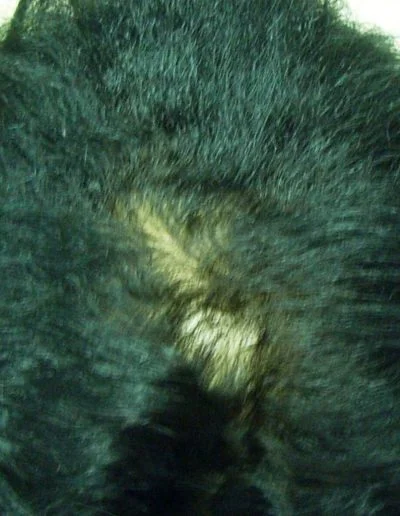 Before
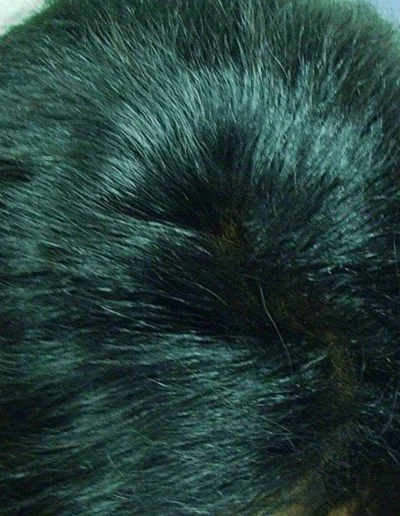 After
AfterChemical relaxers and tight weaves caused 20% density loss in early 20s — fully reversed with targeted treatment.
Learn how we helped →Traction Alopecia can be reversed if caught early by stopping tight hairstyles and reducing tension on the scalp. However, if the condition continues over time, permanent follicle damage can occur, making hair loss irreversible. In early stages, hair can regrow with gentle hair care and topical treatments. If hair follicles are scarred, regrowth is unlikely and options like hair transplants may be needed.

“Traction Alopecia is treatable with the right approach. By identifying and modifying hair care practices, such as avoiding tight hairstyles and using gentle treatments, significant improvement is possible. Consulting with a trichologist ensures a personalised treatment plan, helping to restore confidence and promote healthy hair growth.”
Yes — in most cases, if the tension is removed early enough. Hair follicles that have not been permanently scarred can recover and regrow. The sooner the cause is addressed, the better the outcome.
Tight braids, cornrows, extensions, weaves, high ponytails, and buns worn repeatedly over time are the most common culprits. Any style that places sustained tension on the hairline or scalp can contribute.
It can become permanent if the follicles are repeatedly stressed over a long period and scarring develops. Caught early, before scarring occurs, the condition is usually fully reversible.
Recovery time varies depending on how long the tension has been applied and how much follicle damage has occurred. Many people see improvement within several months of changing their hair care practices and starting treatment.
Treatment focuses on removing the source of tension, supporting scalp health, and stimulating follicle recovery through specialist topical therapies. In some cases, scalp massage and anti-inflammatory treatments are also recommended.
Chief Trichologist
With over 40 years' experience diagnosing and treating hair loss conditions, Gary has helped thousands of clients understand their condition and find the right treatment path.
Our proven three-step approach to diagnosing and treating hair loss
Comprehensive assessment to identify the root cause of your hair loss using specialist trichology techniques.
Custom treatment plan tailored to your specific condition, lifestyle, and goals.
Regular monitoring and adjustments to ensure the best possible outcomes for your hair health.
Free online assessment • Takes 2 minutes
Get in touch with us today and talk to a trichologist.
Call us on 0203 468 7598 and arrange an appointment.
We have over 312 five-star Trustpilot Reviews.