
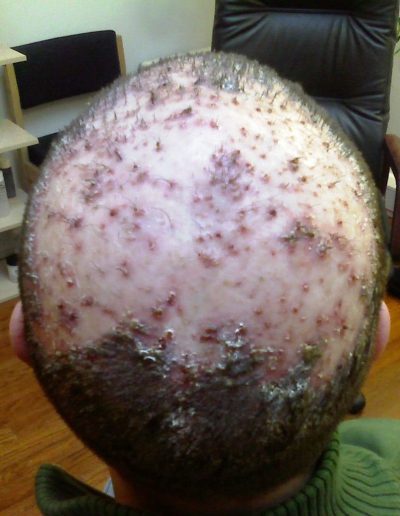
 Before
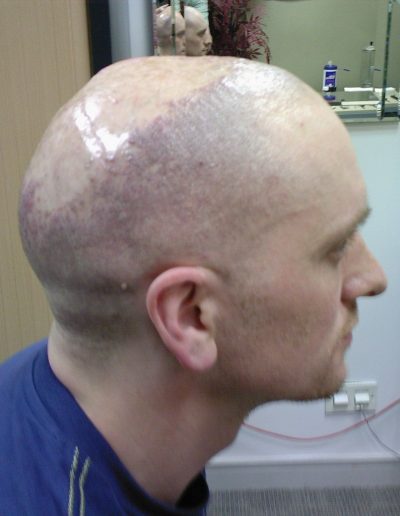 After
AfterFolliculitis Decalvans18 months treatment
Darren's Folliculitis Decalvans Recovery
One of the most severe cases treated — Folliculitis Decalvans halted and stabilised.
Learn how we helped →A rare and progressive scarring alopecia caused by chronic follicular inflammation. Requiring early specialist intervention to prevent permanent follicle damage and hair loss.

Folliculitis Decalvans is a rare but severe form of chronic folliculitis that leads to scarring and permanent hair loss. It presents as inflamed, pustular lesions that lead to the destruction of hair follicles and cicatricial alopecia (scarring alopecia).
In Folliculitis Decalvans, inflammation around the hair follicles causes them to become permanently damaged and eventually destroyed. The condition leads to scarring and the formation of bald patches where hair follicles have been destroyed. This progressive condition can lead to extensive hair loss if not managed properly.
We have helped clients manage severe Folliculitis Decalvans with tailored treatment plans. Read Darren's recovery story to see how we helped him after 18 months of treatment.
BeforeAfterOne of the most severe cases treated — Folliculitis Decalvans halted and stabilised.
Learn how we helped →There are many different treatments available to control the inflammation of Folliculitis Decalvans, but unfortunately no cure has been found. Scarring, if it develops, is permanent. Treatment is aimed at reducing inflammation and preventing further scarring. Long-term management with antibiotics, topical steroids, and scalp care can help stabilise the condition.

“Folliculitis Decalvans requires prompt specialist care. While there is no cure, effective management of the condition can slow progression and prevent further permanent hair loss. Early diagnosis is key.”
There is currently no known cure. However, with specialist treatment, it is possible to manage the condition, reduce inflammation, and slow or halt its progression.
Yes — where scarring has occurred, the hair follicles are destroyed and hair will not regrow in those areas. This is why early intervention is so important, to preserve as much hair as possible.
The exact cause is not fully understood. It is believed to involve an abnormal immune response to bacteria — particularly Staphylococcus aureus — on the scalp, combined with a genetic predisposition.
The rate of progression varies significantly. In some people it advances slowly over many years; in others it can progress more rapidly. Regular monitoring by a trichologist is essential.
Treatment typically involves antibiotics to manage bacterial involvement, anti-inflammatory therapies, and scalp care routines to reduce flare-ups. A trichologist will tailor a plan based on your individual case.
Chief Trichologist
With over 40 years' experience diagnosing and treating hair loss conditions, Gary has helped thousands of clients understand their condition and find the right treatment path.
Our proven three-step approach to diagnosing and treating hair loss
Comprehensive assessment to identify the root cause of your hair loss using specialist trichology techniques.
Custom treatment plan tailored to your specific condition, lifestyle, and goals.
Regular monitoring and adjustments to ensure the best possible outcomes for your hair health.
Free online assessment • Takes 2 minutes
Get in touch with us today and talk to a trichologist.
Call us on 0203 468 7598 and arrange an appointment.
We have over 312 five-star Trustpilot Reviews.