
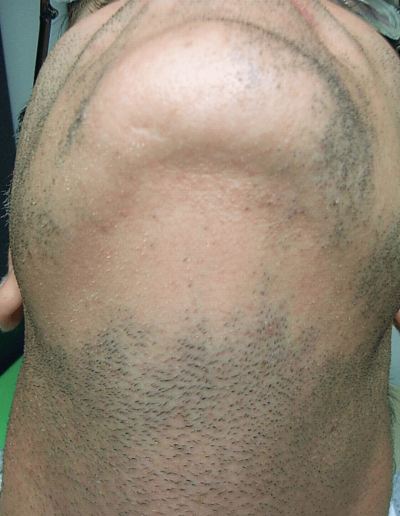
 Before
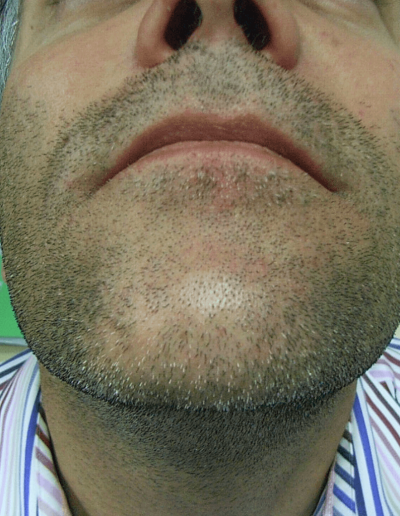 After
AfterAlopecia Barbae8 months treatment
Stephen's Alopecia Barbae Recovery
Patchy beard hair loss from Alopecia Barbae reversed — full beard density restored.
Learn how we helped →Noticed patchy hair loss in your beard? Alopecia Barbae is a common form of autoimmune hair loss that can appear suddenly, often as smooth, round bald spots in the facial hair. On this page, you'll learn what causes it, how to recognise the signs early, and what treatment options are available to help restore your confidence.

Alopecia Barbae is a form of Alopecia Areata that specifically affects the beard area in men. It is an autoimmune condition where the immune system mistakenly attacks the hair follicles in the beard, leading to patchy hair loss.
In Alopecia Barbae, hair follicles in the beard area are targeted by the immune system, causing them to shrink and cease hair production. This results in one or more smooth, hairless patches within the beard. While the condition may remain confined to small areas, in some cases it can progress, leading to larger areas of hair loss.
We have helped many men manage Alopecia Barbae successfully. Read Stephen's Alopecia Barbae recovery story to see how we helped him recover from his condition.
BeforeAfterPatchy beard hair loss from Alopecia Barbae reversed — full beard density restored.
Learn how we helped →Alopecia Barbae is triggered by autoimmune responses where the body attacks hair follicles, leading to patchy beard hair loss. Stress, genetics, and hormonal imbalances can contribute, along with underlying conditions like thyroid disorders. Skin infections or trauma may also play a role.
The Hair Loss Centre's trichologically formulated treatments and lotions reduce the immune response. It is best to treat the condition as soon as it is diagnosed. In many cases, yes, the hair does grow back — either on its own or with treatment. However, the course of the condition is unpredictable, and some people experience repeated flare-ups.

“Alopecia Barbae can be particularly frustrating for men who take pride in their facial hair. While it's an autoimmune condition, the good news is that with the right approach and care, many cases see regrowth. Early intervention and understanding your triggers are key to managing the condition effectively.”
Alopecia Barbae is a form of Alopecia Areata that affects the beard area. It often appears as round or oval bald patches in the facial hair.
Alopecia Barbae is considered an autoimmune condition, where your immune system mistakenly targets the hair follicles in your beard.
In many cases, yes, the hair does grow back, either on its own or with the help of treatment. However, the course of the condition is unpredictable.
There's currently no permanent cure for Alopecia Barbae, but there are treatments that will help to encourage regrowth and reduce inflammation.
Stress doesn't cause alopecia, but it may act as a trigger for some people. Other factors, such as genetics, hormonal changes, or infections, can also play a role.
Yes, if you've noticed bald patches in your beard, it's essential to consult a hair loss specialist. Early treatment can improve outcomes.
Yes. We've helped many clients manage Alopecia Barbae using tailored, non-invasive treatment plans.
Chief Trichologist
With over 40 years' experience diagnosing and treating hair loss conditions, Gary has helped thousands of clients understand their condition and find the right treatment path.
Our proven three-step approach to diagnosing and treating hair loss
Comprehensive assessment to identify the root cause of your hair loss using specialist trichology techniques.
Custom treatment plan tailored to your specific condition, lifestyle, and goals.
Regular monitoring and adjustments to ensure the best possible outcomes for your hair health.
Free online assessment • Takes 2 minutes
Get in touch with us today and talk to a trichologist.
Call us on 0203 468 7598 and arrange an appointment.
We have over 312 five-star Trustpilot Reviews.