
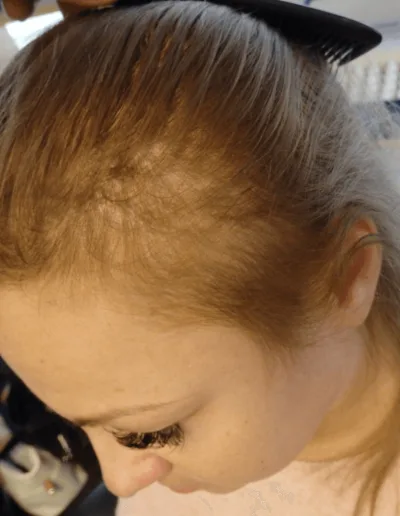
 Before
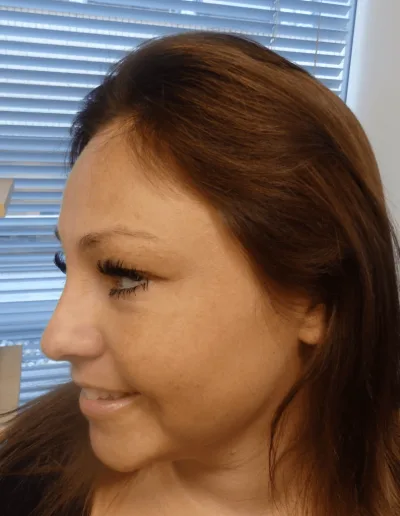 After
AfterDiffuse Thinning12 months treatment
Hanna's Diffuse Thinning Recovery
Gradual all-over thinning reversed with a personalised scalp and nutritional treatment plan.
Learn how we helped →Struggling with hair loss and thinning? Learn what causes Diffuse Thinning, how to spot the symptoms early, and explore proven treatments that help clients regain confidence.

Diffuse hair thinning, also known as chronic telogen effluvium, causes overall thinning across the scalp instead of patchy bald spots. It affects both men and women and is often triggered by stress, illness, hormonal changes, or nutritional deficiencies.
Hair follicles enter a resting phase more quickly than usual, reducing the density of hair across the scalp. The hair may grow back thinner and weaker, further contributing to overall hair thinning. Unlike pattern baldness, Diffuse Thinning affects the entire scalp rather than specific areas.
We helped Hanna recover from severe Diffuse Thinning. Learn how we helped.
BeforeAfterGradual all-over thinning reversed with a personalised scalp and nutritional treatment plan.
Learn how we helped →Diffuse thinning can creep up slowly, so it's easy to miss the early signs. You might notice:
If these changes sound familiar, it could be time to speak with a trichologist and explore your treatment options.
Diffuse thinning can often be reversed, depending on the cause. It is usually triggered by factors such as stress, illness, nutritional deficiencies, or hormonal changes. Once the underlying issue is treated, hair growth typically recovers over time. Treatments such as scalp-stimulating therapies, dietary adjustments, and natural remedies can support regrowth. Early diagnosis is key to achieving the best results.

“Diffuse Thinning can be unsettling, but it often has an underlying cause that can be addressed. By identifying and treating the root issue, many people can restore hair density and improve overall scalp health.”
Female Pattern Balding causes gradual, patterned thinning — typically at the crown and central parting. Diffuse Thinning is more uniform, affecting the whole scalp equally, and is usually triggered by an underlying health or lifestyle factor rather than genetics.
In many cases, yes. Because it is often caused by a treatable underlying issue — such as stress, nutritional deficiency, or hormonal change — addressing the root cause frequently leads to hair recovery.
Common causes include stress, illness, hormonal imbalance, nutritional deficiencies, thyroid disorders, and certain medications. A trichologist can help identify which factor applies to you.
Hair growth is a slow process. Most people begin to see improvement within three to six months of addressing the underlying cause and starting treatment, though this varies by individual.
If you notice your hair looking significantly thinner or flatter than usual, or if you are shedding more than normal, book a consultation sooner rather than later. Early intervention leads to better outcomes.
Chief Trichologist
With over 40 years' experience diagnosing and treating hair loss conditions, Gary has helped thousands of clients understand their condition and find the right treatment path.
Our proven three-step approach to diagnosing and treating hair loss
Comprehensive assessment to identify the root cause of your hair loss using specialist trichology techniques.
Custom treatment plan tailored to your specific condition, lifestyle, and goals.
Regular monitoring and adjustments to ensure the best possible outcomes for your hair health.
Free online assessment • Takes 2 minutes
Get in touch with us today and talk to a trichologist.
Call us on 0203 468 7598 and arrange an appointment.
We have over 312 five-star Trustpilot Reviews.