

Hair loss can be distressing, but many common hair loss conditions can be treated or managed successfully when diagnosed early. Understanding the cause of your hair loss is the first step towards restoring confidence.
When you’re facing sudden, widespread hair loss, it’s natural to fear the worst. For Leah, it felt like the end of the road until the right diagnosis and treatment plan changed everything.
Leah’s Journey: From Misdiagnosis to Recovery
When Leah came to us, she had experienced total scalp hair loss and had been diagnosed with Alopecia Totalis. Understandably, she was devastated. But after a detailed trichological assessment, we identified her condition as a severe form of Alopecia Areata, not Totalis. This subtle but important difference opened up new treatment pathways. We created a plan tailored to her specific scalp needs. This included:
While there is no one-size-fits-all cure, many people experience partial or full regrowth with the right approach.
-
High-strength topical treatments
-
Scalp stimulation to reactivate dormant follicles
-
Immune support and emotional care
Over time, Leah began to see the first signs of recovery: fine vellus hairs, which gradually thickened and darkened. With consistency and care, her hair continued to return.
“I came to The Hair Centre dejected and in shock. After seeing a dermatologist who diagnosed alopecia totalis, I was at an ultimate low point. Gary has been instrumental in my recovery, emotionally and physically.”
— Leah
Can You Recover from Alopecia Areata or Totalis?
Alopecia Areata causes patchy hair loss, often appearing as smooth, bald patches on the scalp. In more advanced cases, it can progress to:
-
Alopecia Totalis – complete loss of scalp hair
-
Alopecia Universalis – loss of all body hair
Alopecia areata is an autoimmune condition in which your immune system mistakenly targets hair follicles, causing hair to fall out. It often appears suddenly and can affect:
-
Small patches of the scalp
-
Larger areas of hair
-
Eyebrows, eyelashes or other body hair in more advanced cases
In Leah’s case, a second opinion revealed that she had severe Alopecia Areata, not totalis, and that opened up new treatment possibilities.
A Personalised Plan, and Faith in the Process
After re-evaluating her condition, we built a treatment plan specifically for Leah’s scalp and symptom pattern. The key was:
-
Targeted high-strength topical treatments
-
Scalp stimulation to reawaken dormant follicles
-
Emotional support and regular check-ins to monitor progress
Over the following months, the change was dramatic. Fine vellus hairs began to appear. These were soon replaced with darker, stronger strands. Leah’s hair was growing back, as was her confidence.
Alopecia can affect anyone, but it most often starts before the age of 40. For some, it stays patchy. For others, it progresses quickly.
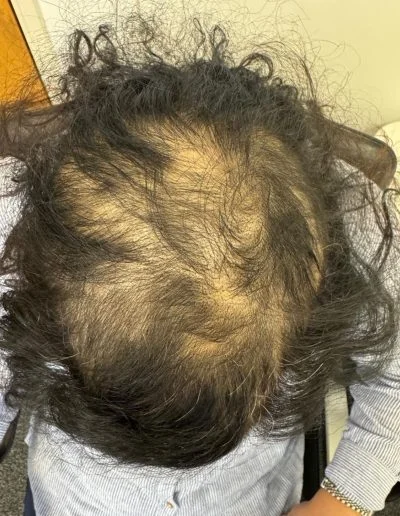
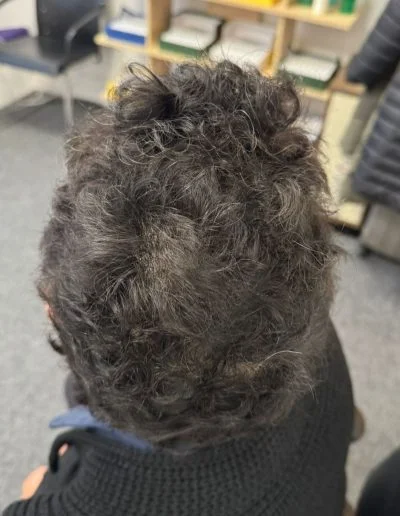
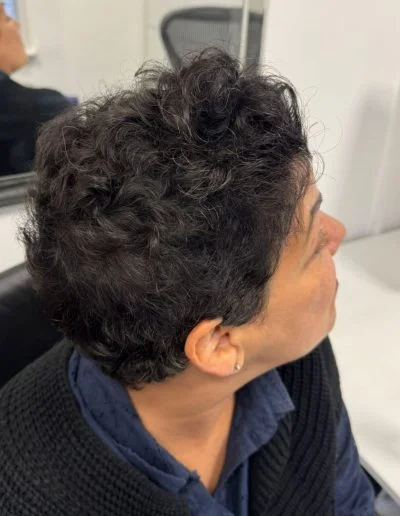
Leah’s Alopecia Areata Recovery – Before and After
These before-and-after images show Leah’s Alopecia Areata recovery over six months (from August 2025), from the beginning through to healthy regrowth. Read Leah’s full story.
Can Hair Grow Back After Severe Alopecia?
Reassuringly, yes, in many cases, hair can regrow. But timing, diagnosis, and emotional support all play a critical role. The earlier alopecia areata is identified and treated, the better the chances of recovery. The follicles are often still alive, even if they appear dormant. Treatment aims to:
-
Calm the immune system
-
Reduce inflammation
-
Stimulate hair follicles to re-enter the growth phase
What We Can Learn From Leah’s Story
Leah’s experience reminds us that:
-
A correct diagnosis matters
-
Recovery is possible, even after extensive loss
-
Emotional reassurance and expert guidance make all the difference
You don’t have to live in fear. Hair regrowth is often closer than it seems.
When Should You See a Trichologist?
If you are noticing:
-
Sudden patchy hair loss
-
Excessive shedding
-
Bare, smooth patches on your scalp
-
A lack of regrowth after several months
…then it’s time to get an expert opinion.
A qualified trichologist can help distinguish between types of alopecia, rule out underlying causes, and create a treatment plan based on your unique needs.
Final Thoughts: Regrowth Is Possible
Hair loss may feel overwhelming, but it doesn’t have to be permanent. Leah’s story is proof that with the right help, you can move from panic to progress. If you’re struggling with unexplained hair loss or patchy shedding:
-
Try our Hair Loss Symptom Checker
-
Book a Free Video Consultation with a qualified trichologist
You don’t have to figure this out alone. Let us help you find your way forward.